(632) 7527 2669 | +63 917-144-CMDA (2632) | +63 908 812 9503 inquiry@cmdacleaning.com

Eco Friendly Cleaning Products in the Philippines

Eco Friendly Cleaning Products in the Philippines

​Considering to buy Eco-Friendly Cleaining products in the Philippines is a huge step towards sustainability and environmental care. However, with the economy these days, buying Eco Friendly Cleaning products and supplies are not on top of our priority. We want to get the most out of our hard earned money to clean a space efficiently. But with the environmental impact of waste going to our rivers and oceans, it would be best to consider what cleaning products we use collectively as humans.

Apart from being eco-friendly, most of these products are safe for family and pets since the ingredients are safe to touch and most of them do not contain volatile organic compounds (VOC) such as alcohol and formaldehydes.

Note: “This is not an affiliate post; we receive no commission. All products featured are independent choices, and we are not affiliated with the brand.”

Need something cleaned?

List of Eco Friendly Cleaning Products in the Philippines

  • Baking Soda
  • Distilled White Vinegar
  • Citric Acid (Fresh Calamansi or Lemon)
  • Charcoal
  • Castile soap
  • Messy Bessy

Eco-Friendly All Purpose Cleaner

Water + Vinegar + Citric Acid (Calamansi juice)

Add a cup of water, half cup of vinegar and two (2) tablespoon of Calamansi juice. Mix well and spray away on surfaces without any need of rinsing. The calamansi gives a deodorizing effect and help remove sticky dirt and grime. You can add five (5) tablespoon of Castille soap to help in hard to remove dirt, just make sure to rinse after.

Too acidic or harsh on your surface? add two (2) tablespoon of baking soda to neutralize the acidity.

Eco-Friendly Kitchen Degreaser

Water + Baking Soda + Charcoal

Ground up charcoal to make two (2) tablespoons of it, add two (2) of baking soda and two (2) tablespoon of water to make a paste out of it. spread through greasy surface on your kitchen, counter tops, stove tops, pans and greasy pots. Let it soak for five (5) minutes and then rinse well to remove the black spots.

Eco-Friendly Toilet Bowl Cleaner

Water + Vinegar + Citric acid (Calamansi)

Add one (1) cup water, one (1) cup vinegar and two (2) tablespoon calamansi juice. pour on to toilet bowl and bathroom walls, specially on surface with stains. Let it soak for 5-10 minutes. Rinse thoroughly after. You can add five (5) tablespoon of Castille soap for hard to remove stains.

Eco-Friendly Spot Cleaner

Citric Acid or Water + Baking Soda

Stains on your surfaces or fabric? Add a few drops of calamansi juice or a pinch of baking soda with water, scrub gently and then rinse. 

Eco-Friendly Glass Cleaner

Water + Vinegar + Citric acid (Calamansi)

Add two (2) cups water, half (1/2) cup vinegar and two (2) tablespoon calamansi juice. Mix thoroughly and then spray on glass and wipe off with microfiber cloth.
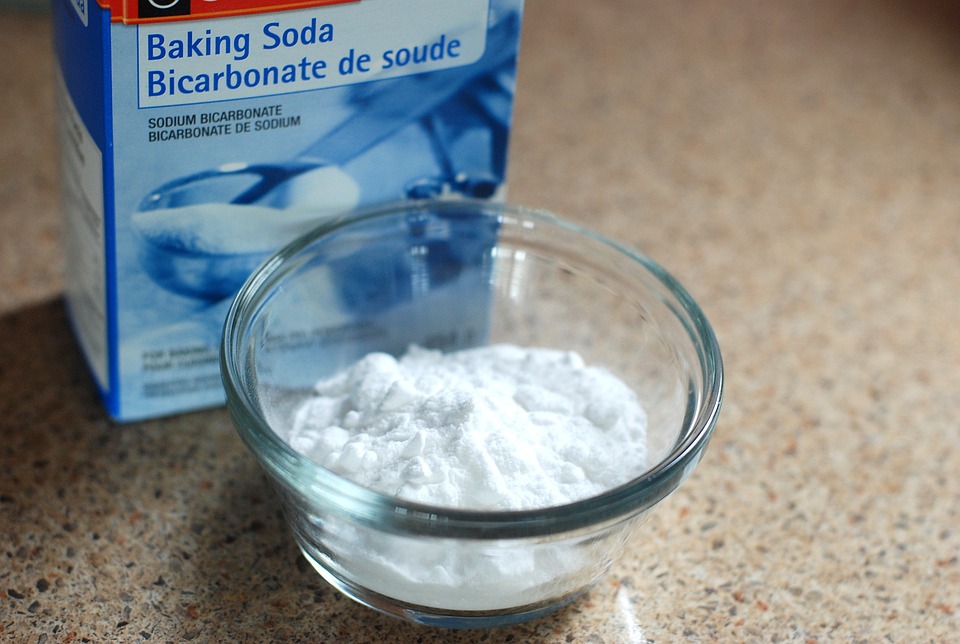
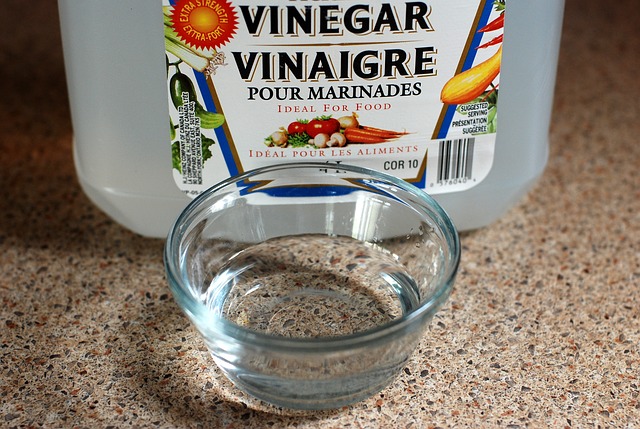
Castile Soap

Castile Soap is not a brand but a product and method of manufacturing a soap. It originated in Spain, specifically the Crown of Castile, hence the name. It is an oil based soap with varying concentrations of olive oil and coconut oil depending on the manufacturer. It is a very good surfactant, meaning it can lather up quite well. If ever you are able to grab a Castile liquid soap, you can add it to the mixtures above to make them lather and help remove dirt and stains faster.
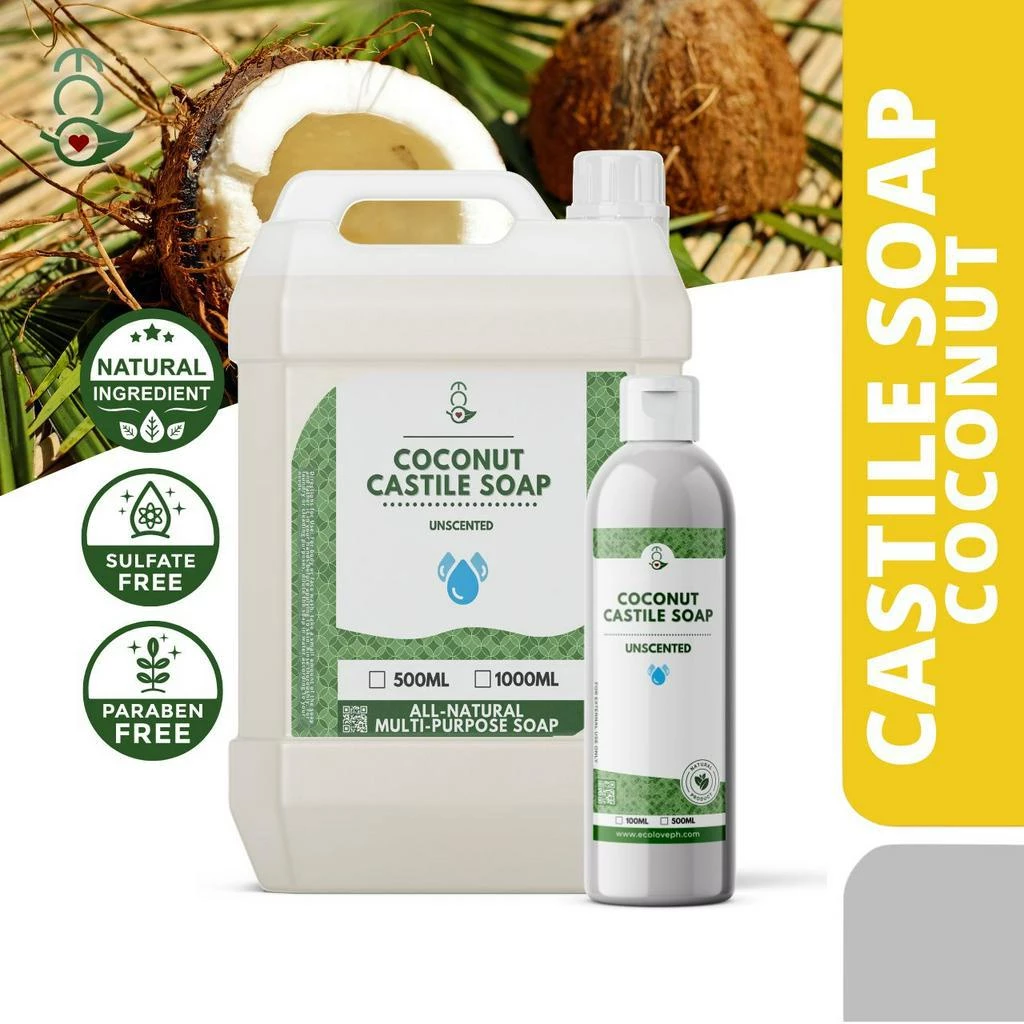
Coconut Castille Soap sold in Shoppee

Need something cleaned?

Messy Bessy

They pride themselves as a provider of cruelty free and plant based cleaning products. After inspecting the ingredients of their products, they are truly eco-friendly. Their products already include specialized cleaning solutions such as disinfectants and kitchen cleaners.
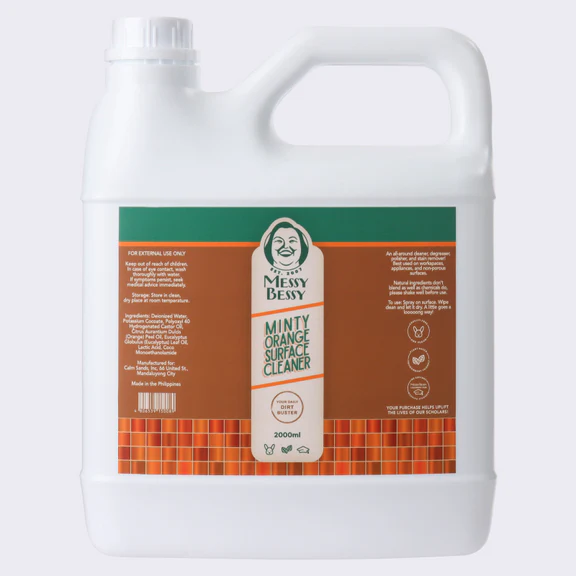
Messy Bessy Surface Cleaner sold in their website

What is a “TRUE” Eco Friendly Cleaning Product?

Before diving into the list of eco-friendly cleaning products in the Philippines, let’s take a look first on what it takes to be truly eco-friendly. Being in the cleaning industry for almost thirteen (13) years, both providing cleaning service and cleaning products, we have come across different cleaning products and have studied hundreds of ingredients to see if they are indeed eco-friendly or not. There things you need to consider to make sure a product is truly eco-friendly:Indicated in Material Safety and Data Sheet (MSDS) – every product (should) provide their own safety data sheet. A section is dedicated there regarding studies made with the product and how it affects the environment. If the ingredients contain surfactants, acidic or alkaline components that can affect aquatic life, then they are “NOT eco friendly”.

  • Indicated in Material Safety and Data Sheet (MSDS) – every product (should) provide their own safety data sheet. A section is dedicated there regarding studies made with the product and how it affects the environment. If the ingredients contain surfactants, acidic or alkaline components that can affect aquatic life, then they are “NOT eco friendly”.
  • Does not include Extreme acidity / alkalinity – If the product contains large quantities and concentration of extremely acidic (like Hydrochloric Acid) or extreme alkaline (like Sodium Hydroxide) solutions, they are “NOT eco friendly”.
  • Does not contain Synthetic surfactants – a common ingredient in cleaning products are surfactants – the thing that makes the cleaning product bubble. Synthetic surfactants like Sodium Lauryl Sulfate can be harsh in aquatic environments.
  • Does not contain artificial fragrance – They are made up of synthetic compounds that can interfere with hormones (for humans and pets), many are considered allergens and irritants and do not degrade well in the environment.
  • Does not contain artificial fragrance – They are made up of synthetic compounds that can interfere with hormones (for humans and pets), many are considered allergens and irritants and do not degrade well in the environment.


Disclaimer: All thoughts and opinions expressed in this post are our own. We purchased this product at full price and did not receive any form of compensation, free products, or sponsorship for this review.

Do you want to learn more on how CMDA Cleaning Services can help you, your family, or your office fight against diseases and keeping your space clean? Send us an email at inquiry@cmdacleaning.com, or call/text us on any number mentioned above.
5S or 7S of Good Housekeeping

5S or 7S of Good Housekeeping

5S or 7S of Good Housekeeping has been a popular training topic being given to Local Government Units (LGUs), Human Resource Management Offices (HRMOs) and those applying to become a hotel housekeeping staff overseas. Though fundamental in cleaning and housekeeping tasks, the application and execution of the 5S or 7S of Good Housekeeping  remains a problem since most training do not include practical applications and are not customized depending on need.

What are the 5S or 7S of Good Housekeeping? Why is it so important that training about it is being given to a lot of people?

If you research further, Henry Ford was the one who originally developed what we know as the 5S methodology back in 1972 but was known as the CANDO programme. Japanese businessman and author Shigeru Mizuno then popularized this as a management method and added 2 more “S”, developing the 5S to 7S in the 1980s. The 5S and 7Ss are:

5S

  • Sort
  • Set in Order
  • Sweep (Clean)
  • Standardize
  • Sustain

7S

  • Sort – Identify and eliminate unnecessary items from your workplace.
  • Systematize – Organize the remaining items in a logical and efficient way.
  • Sweep – Keep your workplace clean and tidy.
  • Standardize – Create a set of standards for cleanliness and organization that everyone in the workplace can follow.
  • Safety – Make sure your workplace is safe for everyone.
  • Self-discipline – Encourage employees to take responsibility for keeping their workplace clean and organized.
  • Sustain – Make sure the 7Ss are an ongoing part of your workplace culture.

Benefits of the 7S if properly implemented

The 7Ss can offer a number of benefits to organizations, including:

  • Increased efficiency and productivity
  • Improved safety
  • Reduced costs
  • Increased employee morale
  • Improved customer satisfaction
  • A more professional image

How to Implement the 7Ss

The 7Ss can be implemented in a number of ways. The following steps can help you get started:

1. Create a plan – The first step is to create a plan for implementing the 7Ss. This plan should include the following:

  • A list of the 7Ss
  • Specific goals for each 7S
  • A timeline for implementation
  • A budget

2. Get the proper training – Train everyone involved and make them aware of this management method. Customize the plan according to your home or office needs.

3. Get everyone involved – It is important to get everyone in the organization involved in the implementation of the 7Ss. This will help to ensure that everyone is committed to the process and that the changes are sustainable.

4. Start small – It is not necessary to implement all of the 7Ss at once. Start with one or two 7Ss and then gradually add more as you become more comfortable with the process.

5. Be patient – It takes time to implement the 7Ss and see results. Don’t get discouraged if you don’t see results immediately. Just keep working at it and eventually you will see the benefits.

Challenges in Implementing 7S of Good Housekeeping

1. Poor planning – one of the main reasons why this management method fail is that plans were not customized according the organization’s needs, plans that do not apply or no plans set in place where there should be.

2. Poorly supervised – goals are not being checked or measured from time to time.

3. Lack of participation – some people tend to think “they already know how to clean” and disregard this type of management method and are not committed in implementing this process.

Conclusion

The 7Ss of Good Housekeeping is a powerful management method that can help organizations to improve efficiency, productivity, safety, and morale. If you are looking for a way to improve your workplace, the 7Ss are a great place to start.

5 Best Wall Paint Colors for Summer

5 Best Wall Paint Colors for Summer

Filipinos love summer – going to the beach, feeling the breeze, all the fun and sun! We love everything about it, we want a part of it in our homes – except the heat.

Here are five of the best wall paint colors to keep your home cool this summer season (and probably your best home improvement you will do!):

Need something cleaned?

White

This is the best color to paint since almost all of its variations reflect the most light. White also gives the impression of cleanliness and simplicity. This color is always available in hardware stores.

Apart from helping your place become cooler during summer, painting your walls white makes your place look more spacious. It blends well with most of the other light colors, so you could play around with the color of your trimmings.

We recommend:
Boysen B-7410 Hygienic White odorless or Boysen HH-706 Tulle White
Davies BF+-50501 Satin White

Peach

Light pink, Light Pink orange, call it whatever you like, you get the idea. Peach colors remind us of the feeling of looking at a beautiful sunset on the beach. In the Psychology of colors, Peach promotes feelings of joy and warmth.

When using the color Peach, work around its spectrum – Light Red, light orange to light yellow.

We recommend:
Boysen HH-5-G72 Fresh Melon
Davies BF+-50551 Almost Peach

Yellow

This is one of the main colors of Summer – yellowish white sand, the yellow sand and yellow flowers! The color yellow is associated with sunshine, hope, laughter, warmth, happiness, and energy.

If you want the color yellow to stand out in your space, add around it a few of its complementary colors – green and blue! If you want it to blend well with other colors, choose between Red, orange and light green.

We recommend:
Boysen HH-15-G116 Gingko Tree
Davies BF+-50545 Yellow Lark

Need something cleaned?

Sky Blue

Not dark blue, not marine blue, nor indigo – sky blue. The color of a cloudless summer sky mid afternoon on the beach. Sky blue gives off the feeling of calmness, peace, and relaxation – something we all want at home.

Sky blue is fun to blend with jewel tones, cream, white and gold colors. If you want this color to stand out, add a touch of yellow or light pink.

We recommend:
Boysen HH-26-G56 Obagi Blue Peel
Davies BF+-50523 Blue Rays


Turquoise

What is the next best thing we love about summer? – Water! Specifically, the color of it on the beach or pool. According to DesignAI, Turquoise is a calm, friendly, and cheerful color, radiating the tranquility of blue, the growth of green, and the vitality of yellow.

Adding Turquoise with most other colors sends off different moods and meaning, it is so much fun to work with! Pair it with other neutral shades, wood tones, and darker shades of blue and you get fantastic results.

We recommend:
Boysen HH-24-G51 Facial Mask
Davies BF+-50525 Ocean view

Image by: Completely Coastal

https://www.completely-coastal.com/2017/05/Turquoise-decor-ideas-bedroom.html

Wall paint color plays a big role in keeping control of the temperature of your home. You would want your home feeling cooler during the summer time, so, choosing the right colors that also match your preference, will help keep your place cool. Dark colors absorb light (infrared rays), making the space warm, while light colors reflect light and lessen the heat.

Early summer in the Philippines is the best time to have your space painted. Humidity is not that high and the paint dries and cures properly. This is another reason why most construction and renovations are done during this period.

How Housekeeping Training Can Help Save You Money

How Housekeeping Training Can Help Save You Money

Housekeeping Training is often regarded as expensive (training fees), time consuming (average of 200 training hours), and sometimes useless – everybody knows how to clean, we were trained since we were young. However, only a few appreciates the value of Housekeeping training because they either need it to apply for a job, or sees the true value and savings of actually learning.

Housekeeping training can help save time and money in a lot of ways. From cutting wastage cost and loss of cleaning materials to optimizing working time, having your household help or office housekeeping staff undergo training can help you stretch your budget.


Training for Household Help

A lot of us think “why should I spend training my household help when they already know how to cook and clean? Why should I when they won’t be staying with us for a lifetime?”. Well, have you done the math on the times you went over your monthly budget for cleaning materials? Have you counted how many times you have to ask your household help re-do the cleaning, which meant using more cleaning products? How many instances did they use the wrong cleaning product? Probably not quite a lot, but let’s put some number in them.

Let us say, your household help went over the budget for all the cleaning materials by One Thousand Pesos (P 1,000.00) per month. That is P12,000.00 a year!  You can always say to them to be careful in using those cleaning products, or use a cheaper alternative, but with no knowledge on how to use these cleaning products EFFECTIVELY, you will still end up buying more. This amount may or may not include accidental spillages, times you hired another household helper as a reliever during their sick days, and the trips to the emergency room because of poor cleaning practices.

Incidences: Monthly Yearly
Wastage (average cost) P 1,000.00 P 12,000.00
Reliever (due to absences) P230/day x2 days P 460.00 P 5,520.00
Total loss: P 1,460.00 P 17,520.00

Looking at the table above, if your household help received some housekeeping training, you save as much as P 17,520.00 a year!

If ever you choose to decide to have your household help undergo housekeeping training, consider where you will have them enrolled and the hours or days it would take. Whether you will be shouldering the training fee, you have to consider that during those training days, someone has to shoulder daily expenses of the household help. This is something that CMDA Cleaning Academy can help, with optimizing training to fit your household housekeeping needs to fit in the shortest amount of time.

CMDA Cleaning Academy TESDA NC II
Number of hours 8 hours 436 hours
Training Fee P 15,000.00 Free
Assessment Fee Free P 1,000.00
Salary loss P 230.00 P 12,650.00

Training for Office Housekeeping

If you have hired your office housekeeping staff from a manpower agency, hopefully they have provided training for hard skills and soft skills that will meet your office housekeeping needs. However, if you have directly hired them, chances are, you will need to train them. What are the tell tale signs? Your office is going beyond the budget for purchasing cleaning supplies, there are persistent housekeeping concerns (like stinky washrooms, washroom and carpet stains), there are times you catch your housekeeping staff doing nothing, there are employees always going on sick leave due to respiratory (asthma or allergy) or gastrointestinal (LBM) problems, or a combination of these cleaning related concerns.

These signs have a corresponding monetary value for each, and they come off as company expenses. Losses and wastages can amount to up to P 2,000.00 a month, which would mean it could go as high as P 24,000.00 a year! Unproductive hours of your housekeeping team cost you money as well. An hour based on Metro Manila’s minimum wage today is about P 67.00. If every day, for 22 days in a month, a janitor is unproductive, that is P1,474.00 a month or P 17,688.00 per year! That’s the amount of money your company pays for someone to do nothing, and still, have problems with the office cleanliness.

Incidences: Monthly Yearly
Wastage (average cost) P 1,000.00 P 12,000.00
Lost hours (P67/hr x 1 hr/day x 22 days) P 1,474.00 P 17,688.00
Supply loss P 1,000.00 P 12,000.00
Reliever (due to sick days) P 537.00 P 6,444.00
Total loss: P 4,011.00 P 48,132.00

Looking at the table above, if your office housekeeping staff received some housekeeping training, you save as much as P 48,132.00 a year!

If ever you choose to decide to have your housekeeping staff undergo housekeeping training, consider where you will have them enrolled and the hours or days it would take. Whether you will be shouldering the training fee, you have to consider that during those training days, someone has to shoulder daily expenses of the staff. This is something that CMDA Cleaning Academy can help, with optimizing training to fit your household housekeeping needs to fit in the shortest amount of time.

CMDA Cleaning Academy TESDA NC II
Number of hours 8 hours 436 hours
Training Fee P 15,000.00 + Free
Assessment Fee Free P 1,000.00
Salary loss / employee P 537.00 P 35,979.00

Difference between Domestic Housekeeping, Institutional Housekeeping and Commercial Housekeeping

Difference between Domestic Housekeeping, Institutional Housekeeping and Commercial Housekeeping

Housekeeping has diversified over the years. The term “housekeeping” has even been interchangeably used between household help, hotel housekeeping, and office janitors. Like “Cleaning” and “Sanitizing”, the term housekeeping must be differentiated according to the type your space needs. After all, each category provides different levels of training and cleaning, and of course, cost.

Essentially, Domestic Housekeeping focuses on managing the cleanliness of homes or one’s residence, while Institutional Housekeeping focuses on managing the cleanliness of hospitality institutions such as hotels, cruise lines, resorts, and such. Meanwhile, Commercial Housekeeping focuses on offices, stores and shops.


The Difference: Domestic Housekeeping

Domestic Housekeeping directly involves household work involving homes. Carried out by a domestic household help (or domestic helper or home caretaker), services revolve around cleaning bedrooms, toilet and bath, kitchen and dining areas and common areas. It may also include cooking and washing dishes, laundry and ironing clothes.

Domestic housekeeping contracts have long durations, regardless of frequency of service. Cleaning can be done on a daily or weekly basis, but you will be dealing with the same person (ideally) either for a year or longer.

Domestic housekeeping skills training is very rare. It is not provided in any level of education, and usually, household helpers are expected to already know the basics of cleaning, and are only trained to perform the level of cleanliness the employer wants.

Salary: P4,500 per month (PH) as per Wage Order No. RB XI-DW-02 DOLE
In practice – P6,000 per month or more depending on arrangements

The Difference: Institutional Housekeeping

This is a common housekeeping service as we see them in hotels, resorts, inns and such. Carried out by “housekeeping” staff, services strictly involve cleaning of guest rooms, toilet and bath, and common areas only.

Housekeeping staff are hired because of their housekeeping skills executed on a daily basis on multiple guest rooms, as well as soft skills that include interacting with guests. That being the case, they enjoy benefits such as longer contract durations, social welfare benefits, and bonuses.

Training for Institutional Housekeeping is very common. It is present in some units in Hotel and Restaurant Management courses, it is available in TESDA courses, as well as in workshops.

Salary: P14,000 – P15,000 per month (as per Jobstreet)

The Difference: Commercial Housekeeping

On the other hand, Commercial Housekeeping deals with managing and maintaining the cleanliness of offices, stores and shops. They are employed to keep common areas such as operation floors, conference rooms and washrooms clean.

Majority of the commercial housekeeping personnel are janitors and are in-house employees, enjoying company and mandatory benefits. For some small offices and stores, they hire a commercial cleaning company for one-time weekly or monthly general cleaning of their space.

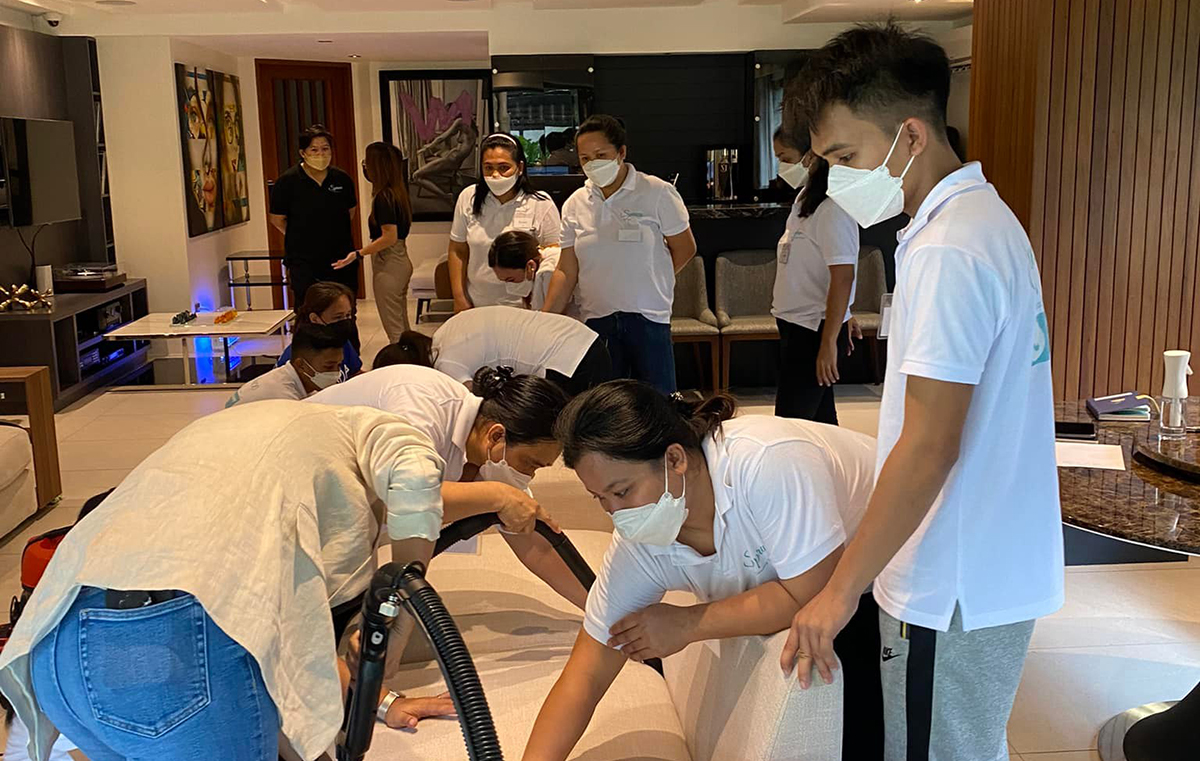
Commercial housekeeping staff requires training ranging from general equipment use (vacuum, steamers, etc) to cleaning and organizing spaces (arranging stuff specific to an office). There are housekeeping training available that covers both.

Salary: P12,000 – P14,000 per month


BONUS: Industrial Housekeeping

There is a profession such as an Industrial Cleaner who manages the cleaning and safety of industrial workspaces such as factories and industrial plants. They do daily cleaning to keep the operations area safe for working, and then occasionally would do a monthly cleaning to remove accumulated oil and dirt that can be hazardous to employees.

Due to the unique requirements of each factory and industrial plant, companies employ and train industrial cleaners to match their needs. Primarily, they need to have Occupational Safety and Hazard (OSH) training as accidents can occur in these workspaces.

Salary: P19,000 – P21,000 per month